Things to Do in Singapore in 2026: 25 Attractions and Experiences
Compare 25 Singapore attractions and experiences by interest, location, cost and weather, from Marina Bay and Sentosa to heritage areas and nature.


The best things to do in Singapore in 2026 are not simply the 25 attractions with the loudest marketing. They are the experiences that fit the weather, the people you are travelling with and the part of the island you are already visiting. Marina Bay gives a first-time visitor the skyline; Chinatown, Little India and Kampong Gelam give the city texture; Sentosa and Mandai work best as deliberate half- or full-day commitments; the Botanic Gardens, Southern Ridges and Pulau Ubin show how quickly the glass city gives way to tropical green.
Plan each day around one major anchor, one neighbourhood, one meal area and one weather fallback. Singapore looks small on a map, but 32°C humidity, sudden rain, ticket queues and repeated mall-level changes make an overfilled route surprisingly punishing. This guide names the exact museums, conservatories, wildlife parks, food centres and nightlife districts worth considering, then explains which combinations are geographically sensible.
Start with the experience you actually want
Singapore is remarkably compact, English is the default, and the public transport system is so efficient it almost feels like cheating. Your real challenge won’t be finding your way around, but rather the difficulty of selection: figuring out which paid attractions actually justify the price tag, which free districts are worth the walk in the humidity, and when it’s time to trade the polished city center for a quieter, local escape.
Singapore attractions at a glance: choose by type
| Attraction or area | Best time | Why it earns a place | Pair it with |
|---|---|---|---|
| Gardens by the Bay | Conservatories after 09:00; Supertrees near dusk | Climate-controlled domes and a free futuristic outdoor landscape | Marina Bay Sands, Helix Bridge and Lau Pa Sat |
| Marina Bay Sands SkyPark | Around sunset | One high viewpoint explains the scale of the bay and gardens | Waterfront walk or ArtScience Museum |
| Merlion Park and Civic District | Morning or evening | Free, low-commitment orientation to central Singapore | Old Hill Street Police Station and National Gallery |
| Singapore Flyer or Marina Barrage | Late afternoon | Choose a paid wheel view or a free grassy skyline | Gardens by the Bay East and dinner by the bay |
The best way to tackle Singapore is to match your choices to the weather, your group’s energy, and the time you have left. A good rule of thumb is to pick one major paid “anchor” for the day, one neighborhood or food enclave to explore, and one flexible outdoor stop that you can easily scrap if the heat or the rain becomes too much.
First visit: iconic Singapore
| Attraction or area | Best time | What it adds | Sensible pairing |
|---|---|---|---|
| Gardens by the Bay | Conservatories after opening; Supertrees after dark | Flower Dome, Cloud Forest and the free Supertree Grove deliver the clearest “future city in a garden” impression | Marina Bay Sands, Helix Bridge and Lau Pa Sat |
| Marina Bay Sands SkyPark Observation Deck | Around sunset | A high view that explains the scale of the bay, port and central skyline | ArtScience Museum and the waterfront promenade |
| Merlion Park and the Civic District | Morning or late afternoon | A free orientation walk linking the postcard view with the Padang and historic core | National Gallery Singapore, Asian Civilisations Museum and Old Hill Street Police Station |
| Singapore Flyer or Marina Barrage | Late afternoon | Choose a paid enclosed wheel or a free open lawn view | Gardens by the Bay East and a bayfront dinner |
Heritage districts and food
| District | Exact places to use | Best for | Friction to expect |
|---|---|---|---|
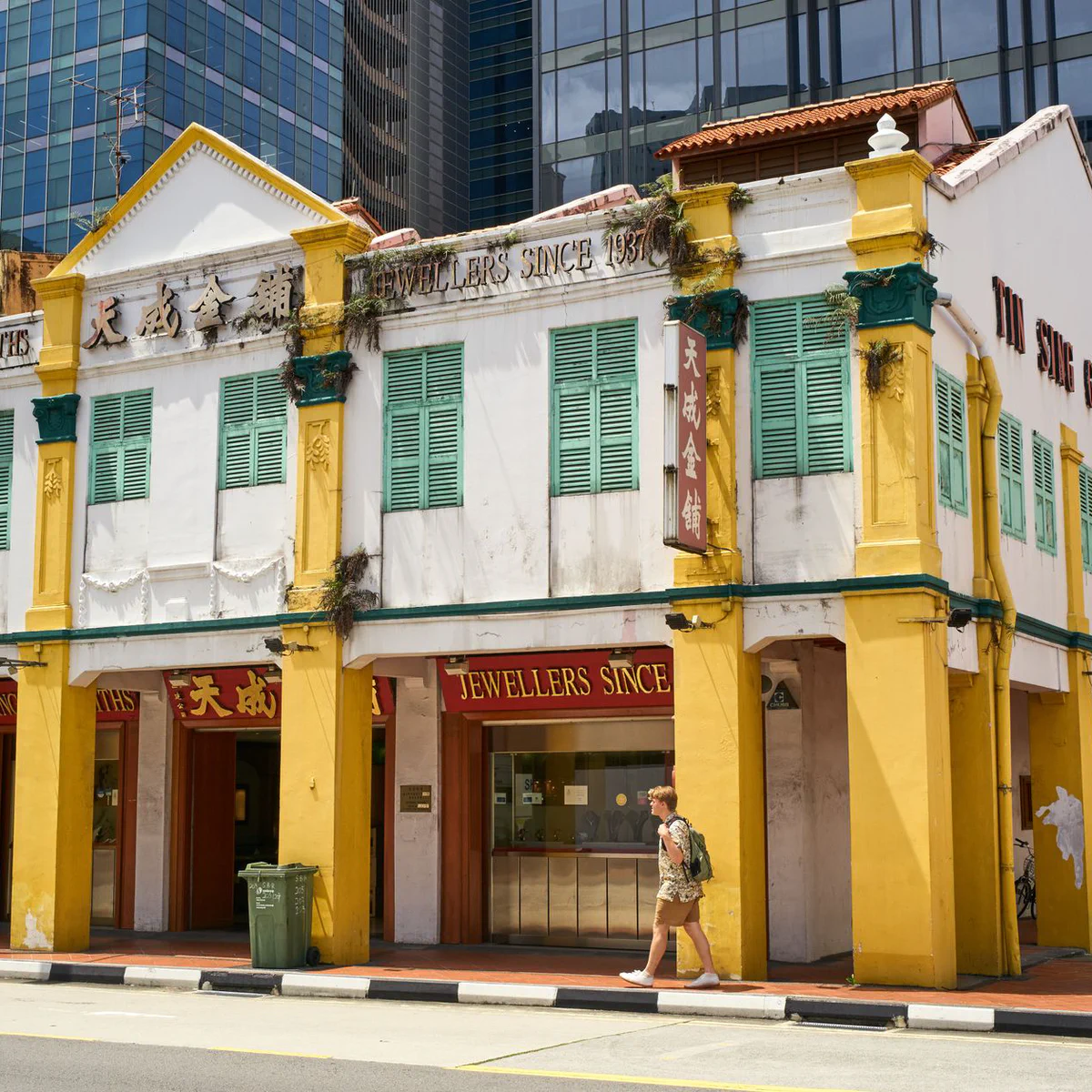
| Chinatown | Buddha Tooth Relic Temple, Sri Mariamman Temple, Maxwell Food Centre and Chinatown Complex | A compact first look at faith, shophouses and hawker food | Hot, busy around lunch; religious sites require respectful dress |
| Little India | Sri Veeramakaliamman Temple, Tekka Centre and Mustafa Centre | Markets, spice, active worship and dense street photography | Crowded pavements, especially at weekends |
| Kampong Gelam | Sultan Mosque, Arab Street, Haji Lane and Gelam Gallery | Malay-Muslim heritage, street art, cafés and small shops | Haji Lane is narrow and busiest in late afternoon |
| Tiong Bahru | Tiong Bahru Market, Streamline Moderne housing and independent shops | A slower morning outside the landmark circuit | Better for breakfast and lunch than late-night activity |
Families and theme parks
| Experience | Exact attractions | Realistic scope | Main decision |
|---|---|---|---|
| Mandai wildlife day | Singapore Zoo, River Wonders, Bird Paradise or Night Safari | Choose one main park and, at most, one compatible second park | The parks are far from the centre; an early start and planned return matter |
| Sentosa day | Universal Studios Singapore, Singapore Oceanarium, Skyline Luge and the beaches | One ticketed anchor plus one easy beach or evening activity | Tickets and island transfers consume more time than the map suggests |
| Rain-proof family day | Singapore Oceanarium, ArtScience Museum or Jewel Changi Airport’s Canopy Park | Pick the indoor anchor nearest the day’s route | Weekend queues can replace the weather as the main problem |
Free and low-cost outdoor places
| Type | Exact places | Best time | Useful pairing |
|---|---|---|---|
| Gardens and parks | Singapore Botanic Gardens, Fort Canning Park and Marina Barrage | Before 09:00 or after 17:00 | Orchard Road, National Museum of Singapore or Marina Bay |
| Ridge walk | Southern Ridges, Henderson Waves and Mount Faber | Start before 08:00 | HarbourFront, the Sentosa cable car or an early lunch |
| Coast | East Coast Park and East Coast Lagoon Food Village | Late afternoon into dinner | Cycling, beach time and seafood |
| Rural island | Pulau Ubin and Chek Jawa Wetlands | Morning, with rain flexibility | Changi Village and an airport-side final day |
Rainy afternoons: name the actual fallback
| Indoor plan | Exact place | Why it works | Do not force it with |
|---|---|---|---|
| Civic District art and history | National Gallery Singapore, Asian Civilisations Museum or National Museum of Singapore | Three specific museums within a compact central zone | A same-afternoon transfer to Sentosa or Mandai |
| Marina Bay design and science | ArtScience Museum and The Shoppes at Marina Bay Sands | Sheltered food, exhibitions and easy access to the bay when rain eases | Repeatedly crossing the exposed waterfront |
| Cooled conservatories | Cloud Forest and Flower Dome | Substantial indoor gardens that still feel specific to Singapore | Treating the outdoor OCBC Skyway as rain-proof |
| Family indoor anchor | Singapore Oceanarium or Jewel Changi Airport | Long indoor dwell time with food and facilities nearby | Adding a late Mandai park simply because the rain stops |
If your time is limited, don’t try to build a route from scratch—lean on our one-day Singapore itinerary or two-day route instead of trying to piece together attractions that might be geographically scattered.
A practical Marina Bay half-day and evening
Marina Bay is a district, not one attraction. For a lower-friction first visit, start around the Civic District or Merlion side in late afternoon, cross the bay only once, take an indoor meal or cooling break, then finish at the Supertree Grove after dark. Reversing direction several times between Marina Bay Sands, the Merlion and Gardens by the Bay adds exposed walking without adding new views.
| Available time | Sensible scope |
|---|---|
| 2–3 hours | One waterfront side plus one skyline viewpoint; do not add paid conservatories |
| Half-day | Civic District or ArtScience Museum, a meal break, then one Gardens by the Bay choice |
| Evening only | Waterfront walk, dinner and the free Supertree program if the live schedule fits |
You do not need to stay at Marina Bay Sands to enjoy the waterfront, observation deck or nearby gardens. If the hotel itself is under consideration, use the Singapore where-to-stay guide to compare the Marina Bay premium with Chinatown, Bugis and Orchard. If shopping is the main goal, the Orchard Road guide offers a more focused route than extending this Marina Bay walk across town.
Iconic sights: Gardens by the Bay and Marina Bay Sands
No visit to Singapore is complete without witnessing the architectural and horticultural marvels that line Marina Bay. However, seeing them without getting overwhelmed requires a bit of strategic planning. Here’s the reality of navigating the ticketing and the timing.

Gardens by the Bay
The Supertree Grove itself is a fantastic free resource, but the cooled conservatories are where the real investment lies. Be aware that Gardens by the Bay doesn’t offer a single “do-it-all” ticket; you’ll need to choose from various combo options covering the Flower Dome, Cloud Forest, Floral Fantasy, and the OCBC Skyway. We recommend checking our Gardens by the Bay guide to decide which areas actually interest you before you commit to a bundle.
To beat the heaviest crowds, aim to be at the gates just before the 9:00 AM opening. The Cloud Forest and Flower Dome are significantly quieter in the morning, and you can always return in the evening for the free Garden Rhapsody light show. Booking your tickets online in advance isn’t just a suggestion—it’s a necessity if you want to avoid the soul-crushing on-site queues, especially on weekends or during school holidays.
If time or budget is tight, skip Floral Fantasy and the OCBC Skyway. Ground level provides clear Supertree views without another ticket, while Marina Bay Sands SkyPark serves a different skyline purpose. For most first visits, the Flower Dome and Cloud Forest make the strongest paid pairing because they contrast dry and humid conservatory landscapes.
Marina Bay Sands SkyPark Observation Deck
That ship-shaped structure perched atop the three towers of Marina Bay Sands is the city’s most recognizable landmark. While it’s a hotel, you don’t need to be a guest to enjoy the view. The SkyPark Observation Deck on the 57th floor is open to the public for a fee. Sunset is the best time for the combined day-and-night view; you get to see the city transition into its neon night-self, and if your timing is right, you can watch the Supertree light show from a spectacular bird’s-eye perspective.
The deck can get incredibly crowded, particularly as the sun begins to dip. If you’re looking for a more affordable alternative, the rooftop of the nearby Marina Barrage or a walk across the Helix Bridge offers fantastic, free photo ops of the skyline. The SkyPark is a great view, certainly, but it’s not the only way to see the city.
Hawker food: the heart of Singapore
In 2020, UNESCO inscribed Singapore’s hawker culture on its Representative List of the Intangible Cultural Heritage of Humanity. Hawker centres are useful because many independent stalls share one seating area, but they are not interchangeable: opening days, heat, queues and stall closures can change the meal. Use the hawker-centres guide to choose a venue by route and timing.

How to eat at a hawker centre like a local
The process is straightforward, but it has its own set of unwritten rules. Here’s how to navigate the experience without looking like a total amateur:
- Find a table first. This is the golden rule. Hawker centres are self-service, so walk around and claim a spot before you even think about ordering. You might see a packet of tissues on a table—that’s a “chope,” a local way of marking a seat as taken. Note your table number, as some stalls will use it to bring your food to you.
- Order from individual stalls. Don’t expect one counter to serve everything. Each stall is a specialist in one or two dishes. Walk up, check the menu (usually in English and Chinese), and place your order directly with the vendor.
- Have your cash ready. While digital payments are becoming more common, cash is still the lifeblood of many hawker stalls. Carry small notes (SG$2 to SG$10) to avoid fumbling at the counter. Most dishes are a bargain, typically costing between SG$3.50 and $10, with drinks being a separate SG$1-2 purchase.
- Collect your food. You’ll either be given a buzzer or you’ll need to stand nearby and wait for your order to be called. It can get loud, so stay sharp.
- Clear your own tray. It’s not just polite; it’s a legal requirement. Return your used trays and crockery to the designated racks when you’re finished. Keep an eye out for separate halal and non-halal return points.
Must-try dishes
- Hainanese chicken rice: poached chicken served with fragrant rice and chilli sauce.
- Char kway teow: flat rice noodles stir-fried with egg, prawns, Chinese sausage, and soy sauce.
- Laksa: a spicy coconut noodle soup with prawns and fish cake.
- Chili crab: messy, sweet-spicy crab usually eaten with fried buns (available at dedicated seafood hawker stalls, especially at East Coast Lagoon).
Recommended hawker centres
- Maxwell Food Centre (Chinatown): famous for Tian Tian Hainanese Chicken Rice, which often has a queue.
- Lau Pa Sat (CBD): a historic cast-iron structure with a wide selection and a lively evening satay street.
- East Coast Lagoon Food Centre: right next to the beach, perfect for seafood after a cycle along East Coast Parkway.
Cultural neighborhoods: Chinatown, Little India, and Kampong Glam
| Neighborhood | Concrete stops | Best for | Friction to expect |
|---|---|---|---|
| Chinatown | Buddha Tooth Relic Temple, Sri Mariamman Temple, Maxwell and Chinatown Complex | Temples and hawker food in one compact route | Hot, crowded lunch hours; respectful temple dress |
| Little India | Sri Veeramakaliamman Temple, Tekka Centre and Mustafa Centre | Spices, markets and dense street colour | Narrow market aisles and heavy weekend crowds |
| Kampong Glam | Sultan Mosque, Arab Street, Haji Lane and Gelam Gallery | Cafes, street art and light shopping | Dress and noise awareness around the mosque |
| Tiong Bahru | Tiong Bahru Market, older housing blocks and independent shops | A slower local morning | Better for breakfast and lunch than late night |
Singapore’s ethnic neighborhoods aren’t theme parks; they are living, working communities. They are best explored on foot, but remember that you’re walking through people’s spiritual and daily lives. Each has a completely different energy and a few spots that actually justify the walk.

Chinatown
Start your morning at the Buddha Tooth Relic Temple. This massive Tang-style temple is a sight to behold, and the museum and rooftop garden are free—just remember to keep your voice down and respect the quiet. A short walk away, the Sri Mariamman Temple offers a striking contrast; it’s the city’s oldest Hindu temple and a designated national monument. Seeing these two places of worship so close together is the best possible introduction to Singapore’s multicultural reality.
Chinatown is also a maze of street markets and traditional medicine shops, anchored by the excellent Maxwell Food Centre. Arrive before the midday heat and lunch crowds turn the streets into a humid gauntlet.
Little India
Little India is dense with shophouses, spice shops and active religious sites. Walk Serangoon Road toward Sri Veeramakaliamman Temple, then use Tekka Centre for dosa, biryani or a cool drink. The wet market is busiest in the morning; keep bags close in crowded aisles and dress respectfully before entering the temple.
Kampong Glam
This historic Muslim quarter is defined by the golden dome of the Sultan Mosque. The surrounding streets, particularly Haji Lane, are narrow alleys filled with indie boutiques and striking street art. It’s the perfect spot for a coffee or some vintage shopping. Kampong Glam also houses the Malay Heritage Centre and some fantastic Middle Eastern restaurants—perfect for a long, slow lunch when you need to escape the sun.
Tip for all three neighborhoods: Weekday mornings are your best bet. Weekends are a different beast entirely, with crowds that can make even a simple walk feel like a challenge.
Nature and wildlife: Botanic Gardens, Zoo, and Southern Ridges
| Outdoor style | Specific places | Best time | Easy pairing |
|---|---|---|---|
| Gardens and parks | Botanic Gardens, Fort Canning and Marina Barrage | Early morning or evening | Orchard Road, museums or Marina Bay |
| Walks and viewpoints | Southern Ridges, Henderson Waves and Mount Faber | Start before 08:00 | VivoCity and the Sentosa cable car |
| Seaside movement | East Coast Park and East Coast Lagoon Food Village | Late afternoon | Cycling, seafood and a hawker dinner |
| Older Singapore landscape | Pulau Ubin and Chek Jawa | Morning | Changi Village or an airport-buffer day |
Singapore markets itself as a City in a Garden, and for once, the marketing is fairly accurate. While much of the island is built up, there are genuine pockets of lush, tropical greenery that are well worth the effort—provided you plan for the heat.

Singapore Botanic Gardens
In 2015, the Singapore Botanic Gardens became the first tropical garden to be listed as a UNESCO World Heritage Site. Entry is free, and the gardens are massive. You could easily lose three hours wandering through the themed sections like the healing garden or the remnant rainforest. It’s a spectacular place, but be warned: there is very little shade on the main paths, so carry water and wear a hat.
The National Orchid Garden inside the grounds requires a separate, modest fee. It’s relatively quiet in the mornings and offers a more focused, manicured experience.
Singapore Zoo and Night Safari
Located in the Mandai Wildlife Reserve, the Singapore Zoo is consistently ranked among the world’s best for a reason. The real standout, however, is the Night Safari. It’s not just a zoo with the lights off; it’s a nocturnal experience where you can see animals like Malayan tapirs and big cats when they’re actually awake. You can take the tram or walk the trails. If your schedule allows, don’t try to do the daytime zoo and the Night Safari on the same day—it’s a recipe for total exhaustion. Both are worth a dedicated visit.
Southern Ridges
If you’re looking for a proper hike without leaving the city, the Southern Ridges is a 10-kilometer trail connecting several parks via elevated walkways. The Henderson Waves bridge is the photogenic highlight here. It’s free and offers panoramic views of the coast, but you must start early—ideally before 8:00 AM—to avoid the brutal midday sun. The trail is mostly shaded, but the humidity remains a constant companion.
Quieter alternatives: East Coast Park, Pulau Ubin and Tiong Bahru
Beyond the headline attractions, there are several local-favorite spots that offer a quieter, more personal side of Singapore. These are the places that rushed visitors often skip, which is exactly why you should consider them.
East Coast Parkway (ECP)
For a different vibe, head to East Coast Parkway. It’s a stretch of coastline where you can rent a bike and cycle along the water, past man-made beaches and seafood restaurants. It’s a much more relaxed alternative to the central tourist hubs. Rent a bike for a couple of hours and cycle toward the East Coast Lagoon Food Centre for a sunset meal. The path is flat, easy, and a great way to see how locals actually spend their weekends.
Pulau Ubin
For a taste of old Singapore—before the skyscrapers and the glass—take a bumboat from Changi Point Ferry Terminal. The 10-minute ride costs just a few dollars (cash only) and drops you into a rustic island with dirt roads and a preserved kampong atmosphere. It’s a complete, rugged contrast to the city’s polished image. Beware of the mosquitoes, bring plenty of water, and don’t expect any fancy facilities.
Tiong Bahru
Tiong Bahru is one of the city’s oldest housing estates, famous for its 1930s architecture. It’s become a hub for hip cafes and indie bookstores, but it still retains its old-world charm. Get here early to see the wet market in full swing, then grab a coffee at one of the nearby cafes. It’s a compact area that you can easily explore on foot in an hour—a perfect, low-pressure break from the skyscraper-heavy zones.
Choose things to do by situation
Free and low-cost Singapore
Structure your day around the city’s incredible public spaces: the Botanic Gardens, the Marina Bay waterfront, the heritage neighborhoods, or a hike along the Southern Ridges. Spend your budget on great hawker food and the efficient transport system, and add a paid attraction only if it fundamentally changes your perspective of the city. Our Singapore daily-budget breakdown explains why a handful of observation deck tickets can quietly become your largest expense.
Singapore with kids
| Age or mobility | Strong choices | Avoid |
|---|---|---|
| Babies, toddlers and strollers | Singapore Oceanarium, Gardens by the Bay conservatories and Orchard malls | Long exposed walks and two Mandai parks in one day |
| Ages 4–8 | Singapore Zoo, Bird Paradise, Jewel and a light Sentosa beach block | Three or more paid attractions in one day |
| Ages 9+ and teenagers | Universal Studios, Skyline Luge and Night Safari | A full day of queues without a recovery break |
| Three generations | Driver-supported Mandai day or mixed indoor-outdoor Marina Bay route | Routes requiring repeated transfers and long walks |
Choose one major “anchor” attraction per day, not a marathon of three or four. Mandai, Sentosa, and Marina Bay each offer enough to fill a full day, and trying to combine them is a recipe for long transfers and exhausted children. Our five-day family itinerary includes the necessary heat breaks and realistic meal timings that keep the trip enjoyable for everyone.
For children under six, the strongest days have a predictable indoor reset: Singapore Zoo in the cooler morning followed by a hotel pool, Singapore Oceanarium followed by Palawan or Siloso Beach, or the Children’s Museum Singapore followed by Fort Canning when the ground is dry. School-age children can handle a larger anchor such as Universal Studios Singapore or Bird Paradise, but they still need a proper seated lunch rather than snacks between queues. Teenagers often respond better to Skyline Luge, Haji Lane, ArtScience Museum and an evening skyline than to a full day of passive sightseeing.
With a stroller, check lift routes at MRT stations and avoid treating every “10-minute walk” as equal; uncovered crossings in a downpour are the hard part. At Mandai, decide before arrival whether the evening Night Safari is genuinely worth extending the day. At Sentosa, group attractions around Resorts World, Imbiah or the beach zone instead of commuting between all three repeatedly.
Things to do for couples
Prioritize atmosphere over a high price tag. A quiet waterfront walk after a sudden rain, a neighborhood food trail, or watching the sunset from a free public viewpoint can be far more romantic than stacking multiple timed bookings for observation decks and expensive cocktail bars. Keep your schedule loose so you can respond to the weather and your own energy levels.
For a first visit, walk from the Civic District to Marina Bay around golden hour, take a long dinner, then choose either the Supertree Grove or one skyline drink—not both on a stopwatch. For a quieter date, start at Tiong Bahru Market, browse the estate’s curved apartment blocks and independent shops, then continue to Robertson Quay after sunset. Nature-focused couples can do the Botanic Gardens and National Orchid Garden in the morning, retreat for lunch, and return outdoors only after the heat softens.
The main mistake is paying for “romance” three times: a sunset observation deck, a premium bayfront dinner and a rooftop bar often duplicate the same view. Choose the moment that matters most and leave the rest of the evening unbooked.
Things to do at night
| Evening goal | Best choice | Best for | Main caution |
|---|---|---|---|
| Free skyline | Marina Bay waterfront, Spectra and Garden Rhapsody | First visits, budgets and families | Check live times and keep a mall rain backup |
| Riverside bars | Clarke Quay, Boat Quay or Robertson Quay | Easy socialising and groups | Drinks are expensive and weekends feel commercial |
| Cocktails and dinner | Chinatown, Tanjong Pagar and Telok Ayer | Travelers who care about the drinks and food | Small venues often require reservations |
| Live music and street atmosphere | Kampong Glam and Haji Lane | Younger, casual evenings | Narrow lanes and neighborhood noise limits |
| Nocturnal wildlife | Night Safari | Families and wildlife enthusiasts | Long journey and a late return |
| Beach evening | Siloso or Tanjong Beach | Couples and groups | Check late transport and ride-hailing waits |
Singapore nightlife is not one strip. Choose by the kind of night you want, then keep the return route simple. Our full Singapore nightlife guide compares neighbourhoods, transport and late-night trade-offs in detail.
| Night area or experience | What the evening actually feels like | Best for | Practical warning |
|---|---|---|---|
| Marina Bay and Supertree Grove | Skyline walk, scheduled light programs and polished hotel bars | First-time visitors and couples who want the classic city at night | Long exposed walks; check live show times rather than racing between programs |
| Clarke Quay | Loud commercial bars, clubs and a busy riverfront | Groups who want a concentrated late night | Drinks are expensive and sound carries; plan the trip back after MRT hours |
| Robertson Quay | Slower riverside dinner, wine and craft beer | Couples and conversation-led evenings | Venues are more spread out than Clarke Quay |
| Boat Quay and Circular Road | After-work bars and riverfront dining beside the CBD | A central dinner that may continue into drinks | Riverfront restaurant menus can carry a location premium |
| Ann Siang Hill and Club Street | Small bars, restaurants and Chinatown shophouse atmosphere | Bar-hopping without a mega-club setting | Seating fills quickly on Friday evenings |
| Kampong Gelam | Haji Lane bars, live music and casual late food | Younger groups and mixed café-to-bar nights | The narrow lane becomes congested at peak times |
| Night Safari | A full nocturnal wildlife attraction, not conventional nightlife | Families and wildlife-focused travellers | It requires a dedicated Mandai transfer and a late return; do not bolt it onto a full central day |
For the lowest-friction first night, eat at Lau Pa Sat or Chinatown, walk the bay and return before fatigue turns every interchange into work. For a proper late night, stay around one river zone rather than beginning at Marina Bay, jumping to Haji Lane and ending at Clarke Quay. Singapore is safe and connected, but late ride-hailing, alcohol and venue cover charges can change the budget quickly.
Things to do when it rains
| Rain plan | Specific places | Why it works | Do not pair it with |
|---|---|---|---|
| Civic culture | National Gallery and Asian Civilisations Museum | Compact district and stable indoor circulation | Sentosa later the same afternoon |
| Futuristic indoors | ArtScience Museum and The Shoppes at Marina Bay Sands | Easy indoor transition beside the bay | Repeated exposed crossings in a thunderstorm |
| Conservatory shelter | Cloud Forest and Flower Dome | Air conditioning and a strong first-visit experience | Forcing OCBC Skyway into unsafe weather |
| Family indoors | Singapore Oceanarium or Jewel Changi | More controllable queues and weather exposure | A late Mandai park on the same day |
Singapore’s rain is often intense enough to make even a short walk feel like a challenge. Have a nearby indoor fallback for every outdoor day: a museum in the Civic District, a conservatory at the Gardens, or a long meal in a neighborhood mall. Don’t try to cross the entire island just to reach your “backup” plan—find the closest air-conditioned sanctuary and wait it out.
Use the exact fallback table above: National Gallery Singapore or the Asian Civilisations Museum for the Civic District; ArtScience Museum for Marina Bay; Cloud Forest and Flower Dome for Gardens by the Bay; Singapore Oceanarium for Sentosa; Jewel Changi Airport only when the airport is already part of the route. A named backup saves more time than a generic “go to a museum” note when rain begins suddenly.
Unique and slower choices
Pulau Ubin, the Southern Ridges, Katong-Joo Chiat, and Tiong Bahru reveal a layer of Singapore that you won’t find on a second observation deck. These spots require more attention to opening times, transport, and weather, but they reward you with a much deeper understanding of the city. Add them once you’ve seen the central landmarks, or use them first if you prefer neighborhoods and nature to traditional tourist sights.
Attraction tickets and passes: a decision rule
Don’t fall for the “maximum saving” advertised on city passes. Instead, list the attractions you actually want to visit, check their official live prices for your specific dates, and compare that real total to the pass price. A pass is only a bargain if it aligns with your natural route without forcing you into extra entries or unnecessary travel.
Book your “must-dos” (like the Night Safari or specific evening slots) early to avoid disappointment. Leave the museums, free gardens, and neighborhood walks flexible. Attraction bundles and operating hours can change without notice, so always check the official pages shortly before you pay rather than relying on a cached price in a guide.
Compare booking structures, not marketplaces
| Singapore tickets and tours | Suits | What makes it different | Main trade-off |
|---|---|---|---|
| Choose-2-to-10 attraction pass · dense multi-ticket itinerary | Three or more paid sights whose current list and reservation rules you have checked | Flexible attraction count with standard and premium choices | You are adding low-priority sights only to claim a saving |
| Flexible city pass · Mandai, Marina Bay and Sentosa mix | A longer stay spanning several districts | Broad attraction list across the city | Your chosen sights sit far apart or require incompatible time slots |
| 3.5-hour shared highlights tour · lower-cost first orientation | Short stays and travelers wanting hotel pickup | Fixed overview with transport | You prefer lingering in one neighborhood or dislike drive-by sightseeing |
| Four-hour private local-host tour · flexible route for a family or couple | Mixed interests, older relatives or a first day affected by jet lag | Personalized pace and route | Your budget is better spent on specific attraction tickets |
| 40-minute bumboat cruise · compact skyline overview | A low-commitment evening near Clarke Quay | Short fixed route with little walking | You want dinner, a private guide or a special-occasion experience |
| Tall-ship sunset dinner cruise · high-cost special occasion | Couples or families prioritizing the evening itself | Meal and longer sailing from Sentosa | You mainly want city landmarks or need easy cancellation |
For one or two ticketed attractions, individual admission is usually clearer. A pass becomes useful only after the exact chosen entries beat its live price without creating a worse route. A private tour buys adaptability; a shared overview buys structure at a lower per-person cost; a cruise buys a seated view but does not replace neighborhood time.
Practical tips for a smooth visit
The MRT is remarkably clean, efficient, and covers almost everything you’ll want to see. Use an EZ-Link card or just tap your contactless bank card to get around. For late-night returns or when you’re lugging heavy shopping bags, Grab is an affordable and reliable investment. Avoid taxis during the morning and evening peaks unless you enjoy sitting in traffic.
Singapore is tropical year-round, which means high humidity and frequent, sudden rain. The monsoon season peaks in November and December, but a downpour can happen at any time. Pack lightweight, breathable clothing, a reusable water bottle (the tap water is perfectly safe), and plenty of sunblock. A small umbrella or a light rain jacket should always be in your bag.
The Singapore dollar (SGD) is the standard. While cards are accepted in most shops, cash is still the only way to pay in many hawker centres. Carry small notes for your food and bus fares; ATMs are easy to find if you run low.
For data, pick up a local SIM card at the airport or use an eSIM plan. Free public Wi-Fi (Wireless@SG) is available in many areas, but the registration process can be a bit of a hurdle.
Singapore is one of the safest cities on the planet, day or night, and the legal system is famously strict. English is the official language and is spoken almost everywhere, alongside Mandarin, Malay, and Tamil. You’ll find that almost all signage and announcements are in English.
Finally, bring your most comfortable walking shoes—you will be doing far more exploring on foot than you expect. If you’re planning to visit religious sites, pack a light scarf or wear long pants to cover your shoulders and knees; many temples and mosques require it.
Use the Singapore hub to connect these attractions with your accommodation and transport choices. The strongest itinerary isn’t the one with the most sights—it’s the one that stays geographically coherent and leaves enough room for the city’s food, rain, and rest.
Quick answers
Frequently asked questions
What is the best time to visit Gardens by the Bay to avoid crowds?
Do I need to book tickets for Gardens by the Bay in advance?
How do I eat at a hawker centre like a local?
Can I visit Marina Bay Sands SkyPark without staying at the hotel?
What are some lesser-known things to do in Singapore?
Research notes
Official planning references
We use these primary references for the time-sensitive details relevant to this guide. Rules, prices and operating hours can change, so confirm the live information before you travel.
- Gardens by the Bay — Opening Hours and Closures
Details to check: Current hours, maintenance closures and visitor facilities for the Gardens recommendation (checked 2026-08-30).
- Mandai Wildlife Reserve — Singapore Zoo Know Before You Go
Details to check: Official zoo mobility and visitor-service details behind the wildlife option (checked 2026-08-30).
- Singapore Botanic Gardens — Visitor Information
Details to check: Opening hours, admission, entrances and accessibility for the Botanic Gardens option (checked 2026-08-30).
- National Environment Agency — Hawker Management
Details to check: Official hawker-centre locations and closure checks behind the food-experience recommendation (checked 2026-08-30).
Guide reviewed 14 September 2026. Confirm live rules, prices and operating details with the linked authority before travel.