Bangkok Floating Markets Guide: Which One Should You Visit?
Compare Bangkok floating markets by travel time, operating days, food, boat activity and tourist pressure, then choose a realistic half-day or full-day route.


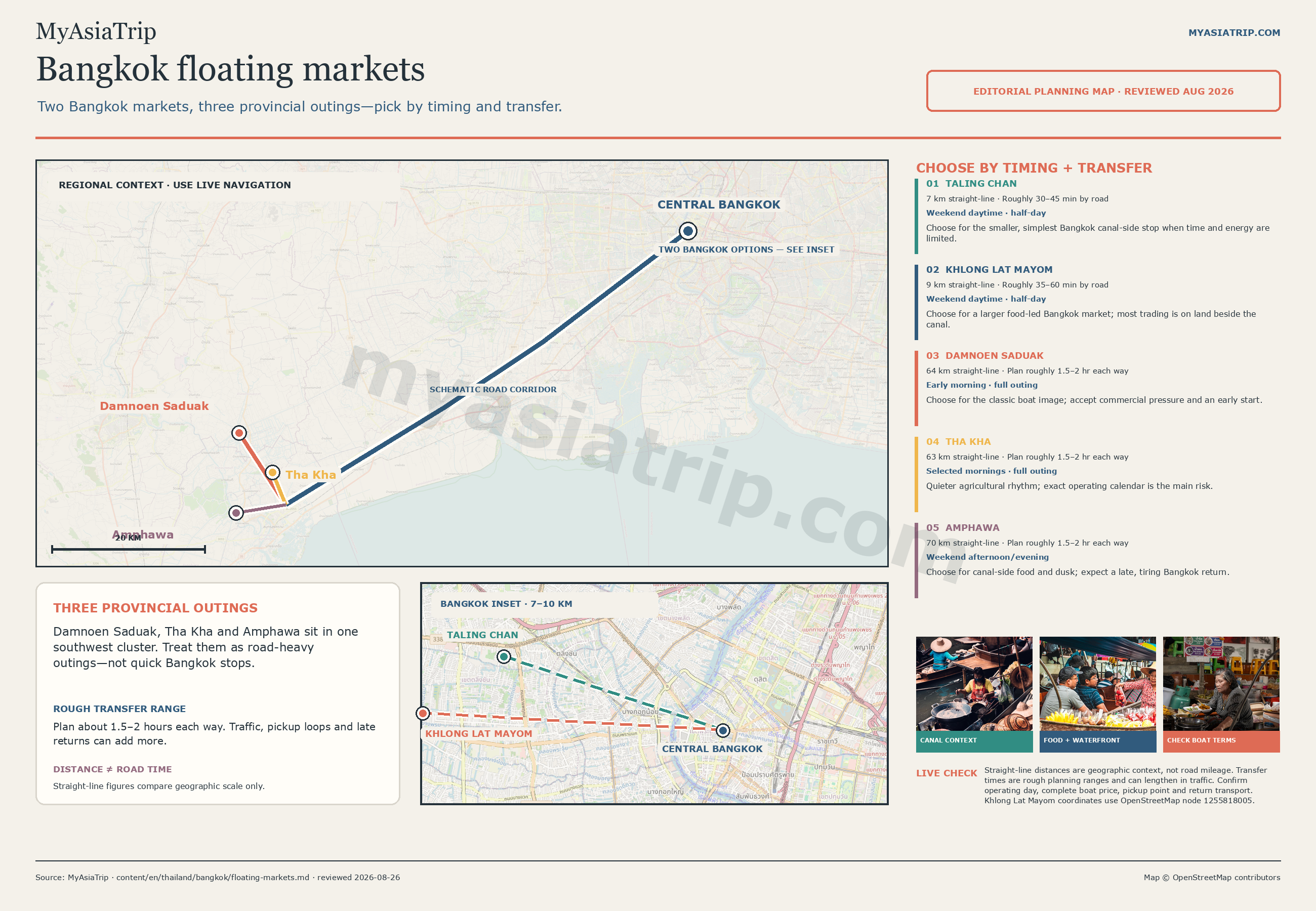
Choosing a “Bangkok floating market” is not as simple as picking a destination on a map. These outings vary wildly: some are located two hours away in neighboring provinces, some peak while you’d normally be having breakfast, and others only come to life on weekends. If you choose based solely on the most famous name you saw on social media, you risk spending four hours in a cramped minivan for an experience that feels more like a staged photo op than a local tradition.
Decide what you want from a Bangkok floating market
Before you set your alarm for 5 AM, decide what you actually want to see. Are you chasing the iconic photograph of fruit-laden boats, or do you just want to eat grilled prawns by a canal? There are four distinct types of market experiences near the capital, and no single location excels at all of them. The practical choice is to pick your priority first, then reconcile yourself to the specific transfer times and rigid schedules that the choice demands.
Always verify the calendar before you commit to transport. Weekend-only operations, limited community-market schedules and public-holiday changes mean a tour listing alone is not proof that every part of a market will be active.
Be honest about your tolerance for traffic. Major names like Damnoen Saduak and Amphawa are significant journeys, not quick city stops. If your time in Bangkok is limited to just 48 hours, the physical toll of a six-hour round trip might outweigh the reward. You may find that a smaller neighborhood market closer to the city center offers a more relaxed morning without the exhaustion of a long day on the road.
Quick comparison
| Market | Best for | Typical rhythm | Main drawback |
|---|---|---|---|
| Damnoen Saduak | Iconic boat-filled morning scene | Early morning | Long transfer and strong tourist focus |
| Amphawa | Evening food and canal atmosphere | Fri–Sun afternoon/evening | Poor fit for a quick morning trip |
| Khlong Lat Mayom | Food-led canal market within Bangkok | Weekend daytime | More land-based market than boat spectacle |
| Taling Chan | Shorter, simpler Bangkok outing | Weekend daytime | Smaller and less theatrical |
| Tha Kha | Agricultural community atmosphere | Selected mornings/weekends | Schedule requires careful checking |
Schedules change and public-holiday arrangements differ. Check an official local source shortly before traveling.

Best floating markets near Bangkok
Khlong Lat Mayom: the food-first Bangkok option
Khlong Lat Mayom is the missing middle between a small canal-side stop and a full provincial day trip. It sits within Bangkok and is strongest as a weekend food market with waterside sections and optional canal activity—not as a miniature Damnoen Saduak packed with vendor boats. Choose it when lunch, Thai snacks and a lower-friction outing matter more than reproducing the classic floating-market photograph.
It is still not a simple rail attraction. The final leg normally requires road transport, and weekend traffic plus a sprawling market layout can make the return slower than the map suggests. Check the Tourism Authority of Thailand listing and a current local schedule before travel, arrive with cash, and agree on a pickup point if using a taxi or ride-hail. If boat scenery is the entire purpose, Damnoen Saduak or a properly timed community route may fit better; if eating is the purpose, Khlong Lat Mayom is often the more proportionate Bangkok day.
Damnoen Saduak: the iconic image
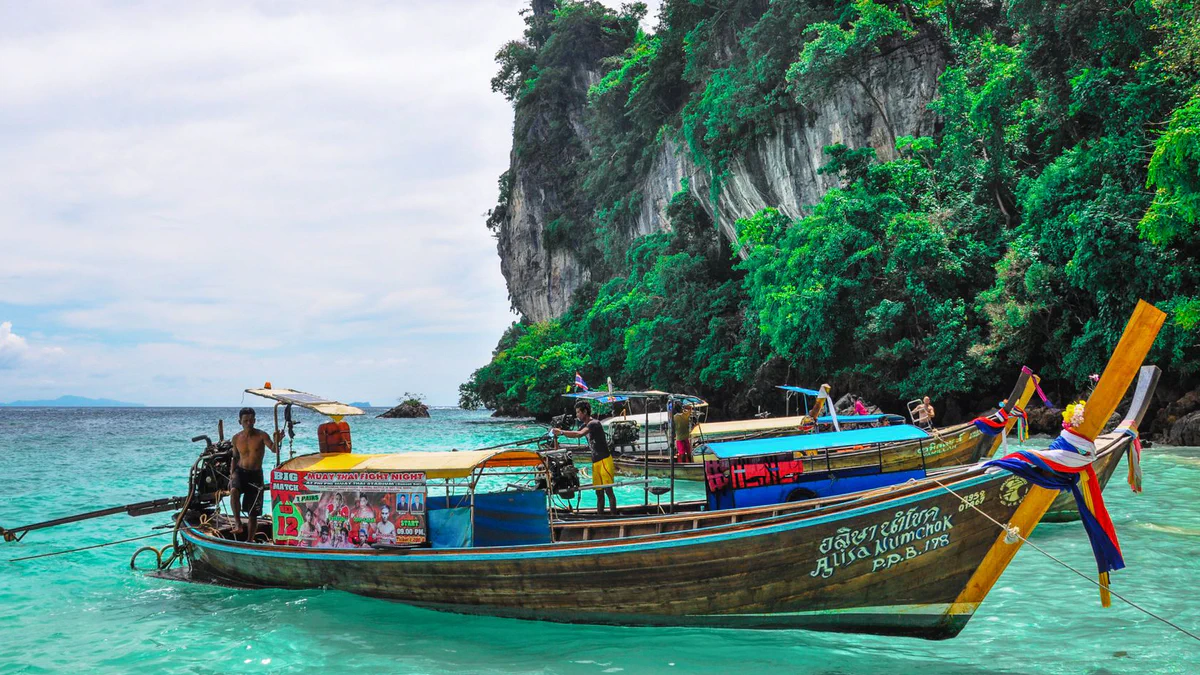
Damnoen Saduak in Ratchaburi is the visual shorthand for Thailand: a chaotic, colorful squeeze of narrow canals and produce-laden boats. It is most active in the early morning, and by noon, the energy usually begins to fade as the heat climbs. This is the heavy hitter of floating markets, and it requires a level of planning to match its popularity.
This is the right choice if you absolutely must have the classic boat-filled photograph and are willing to pay for it with a 6 AM departure. However, don’t come here expecting an “undiscovered” slice of local life. The economy here is built entirely on visitors, meaning you will face constant pitches for boat rides and souvenirs. If you accept that the commercialism is part of the modern reality, you’ll have a much better time.
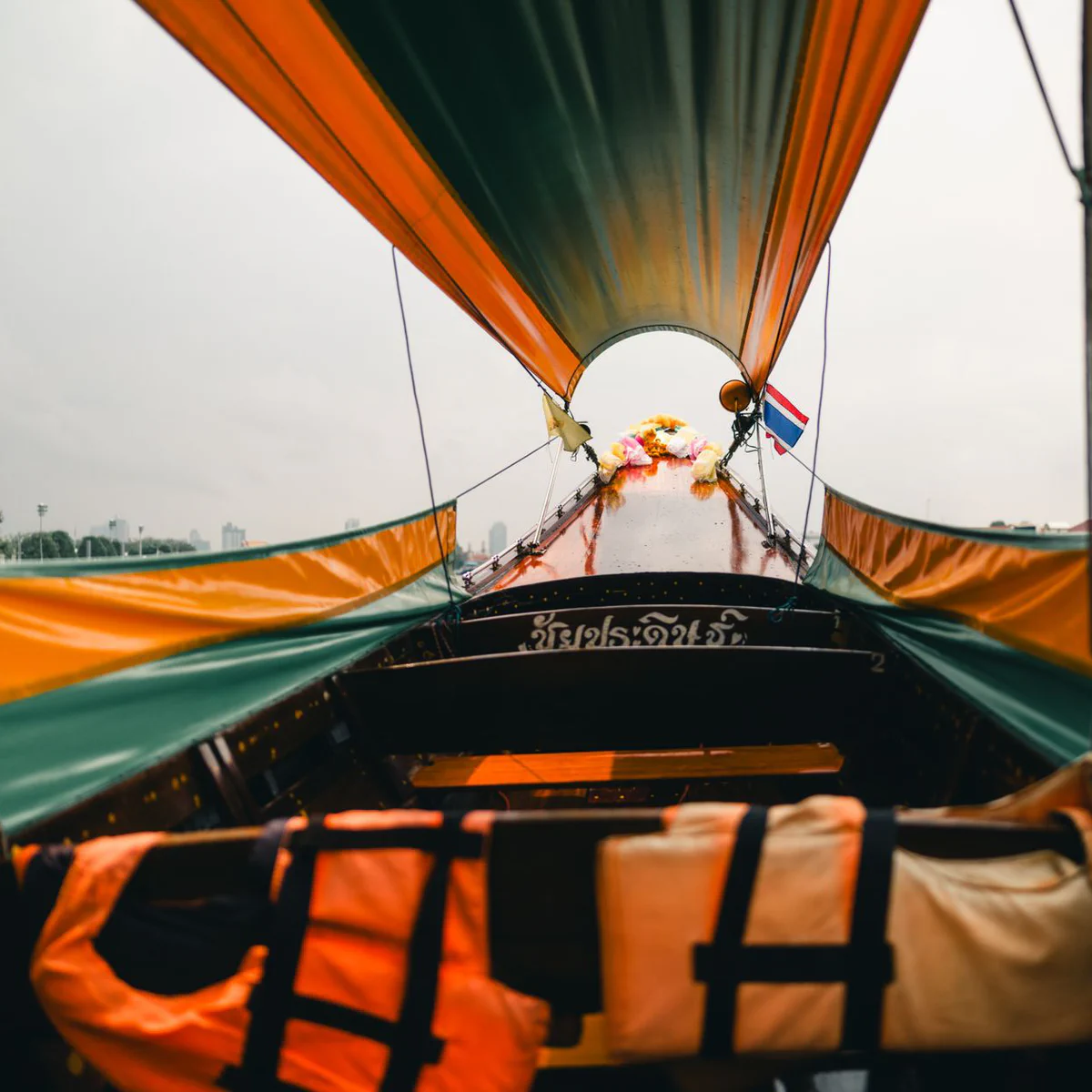
Agree on the complete boat price, duration and route before boarding. Clarify whether the quote is per boat or per person and whether stops are compulsory.
Amphawa: food and evening atmosphere
Amphawa, located in Samut Songkhram, offers a completely different rhythm as an afternoon and evening destination. Instead of the morning rush, you’ll find vendors lining the canal banks as the sun sets, with the smell of grilled seafood dominating the air. It’s a weekend-only affair, typically running from Friday through Sunday, and it feels more like a festive social gathering than a morning chore.
This is the best fit if you value a relaxed atmosphere and canal-side dining over a sunrise photo session. While it is often paired with the Maeklong Railway Market, doing so requires careful synchronization with the train schedules, or you’ll end up waiting hours for a three-minute event. Just be aware that the journey back to Bangkok after dark can be draining; a private car is a luxury that becomes very attractive when you’re facing a two-hour drive at 9 PM.
The return to Bangkok can be tiring after dark. A private transfer offers flexibility; public transport may require connections and a conservative departure time.
Taling Chan: the easiest Bangkok option
Taling Chan is the practical man’s floating market. Situated within Bangkok’s city limits, it functions more like a riverside food court with a few boats than a sprawling canal network. You won’t see a fleet of a hundred vendors, but you will find excellent local dishes, fresh produce, and easy canal tours that don’t require a day-long commitment.
If you only have a few hours to spare or simply can’t face the idea of a long minivan ride, this is your best option. It is a practical compromise: you get a smaller canal-side market experience without the logistical weight of leaving the province. Verify the current operating day and final connection before setting out.
Tha Kha: a quieter community market
Tha Kha has a quieter agricultural setting than the larger tour-market circuit. Vendors may sell coconuts, fruit and local sweets, but the limited schedule makes it the most difficult option to visit without advance checking.
This is the choice for the patient traveler who wants to see a community market in its natural state. You won’t find the theatrical crowds of Damnoen Saduak here, but you will need to plan your entire day around the market’s specific operating hours rather than expecting it to cater to a tourist timetable.
Tour, taxi or independent transport?
A group tour is often the path of least resistance for reaching the more distant markets before the heat becomes unbearable. It handles the logistics of the two-hour drive, but the trade-off is a lack of control. You’ll be on a strict clock and might find yourself ushered into “partnership” souvenir shops or animal attractions you didn’t ask for. Always look closely at the itinerary to see how much of your day is actually spent at the market versus sitting in traffic or at commercial stops.
If your budget allows, a private car is the superior way to travel. It gives you the freedom to leave early, skip the unwanted stops, and combine multiple sights like Maeklong or a local temple without feeling like you’re on a forced march. While public transport is an option for the budget-conscious, the multiple transfers and waiting times often eat up the few dollars you save on the fare, turning a day trip into an endurance test.
For Khlong Lat Mayom and Taling Chan, independent transport is usually reasonable once the final road leg is planned. For Damnoen Saduak at dawn, convenience has real value.
Compare market tours by operating rhythm and comfort
| Floating-market tours | Route and tour format | Suits | Main trade-off |
|---|---|---|---|
| Eight-hour Damnoen Saduak and Maeklong tour · shared or private packages | Broad morning circuit with several pickup and language choices | First-time travelers wanting the famous boat-and-train combination | Package names hide meaningful differences in boat inclusion, group format and shopping stops |
| Eight-hour Damnoen Saduak, Maeklong and Wat Bang Kung day · fixed English route | Structured shared circuit with long published market blocks | Visitors who value a clear fixed sequence over package choice | Meeting point, actual boat time and the realism of the advertised stop durations |
| Eight-hour small-group Maeklong and Amphawa evening · later start and fireflies | Weekend-style late route with local guide and boat components | Travelers who dislike dawn and want market food into the evening | Limited pickup zones, late return, firefly season and poor fit for tired children |
| 7.5-to-10.5-hour market day in a Toyota Alphard · family comfort upgrade | Premium vehicle with two- or three-market route choice | Families, older travelers and heat-sensitive groups | The vehicle premium only pays off if occupancy, pickup and included boat match the group |
| Private Damnoen Saduak, Amphawa and Maeklong charter · maximum route control | Driver-led private car with selectable markets | Groups wanting to cut unwanted stops or leave early | Operating days, guide language, overtime and boat fees remain separate decisions |
| Your actual goal | Best starting choice |
|---|---|
| Familiar morning photographs and the train market | Standard Damnoen Saduak–Maeklong circuit |
| Food, later departure and weekend atmosphere | Small-group Amphawa evening |
| Family comfort matters more than lowest price | Price the Alphard option against a normal private charter |
| You refuse shopping stops and want exit control | Private charter with the route confirmed in writing |
| You mainly want local food without a long road day | Skip these products and visit Khlong Lat Mayom or Taling Chan independently |
Questions to ask a tour operator
- What time does the group reach the market?
- How much independent time is included?
- Is the boat ride included, optional or sold on arrival?
- Are any shop, craft or animal stops compulsory?
- Is Maeklong included, and does the timing match a live train schedule?
- Where is the final Bangkok drop-off?
A long attraction list can hide a short market visit. Read the sequence and durations rather than counting names.
Hiring a car or taxi
When hiring a driver, clarity is your best defense against a mid-day argument. Agree upfront on the total duration, who pays the highway tolls, and exactly where you will be dropped off. Make sure the quote covers the driver waiting for you at the market, rather than just a one-way drop-off. Keep the driver’s phone number handy, and as a rule of thumb, never leave your passport or high-value electronics in the vehicle while you’re out exploring.
Going independently
Going it alone is rewarding for those who enjoy the puzzle of local transport, but it requires a thick skin for delays. You’ll need to navigate minivan terminals and local buses that don’t always follow a digital schedule. Keep a backup return plan and avoid booking a non-refundable dinner or show in Bangkok for the same evening. The roads are unpredictable, and a late return is more likely than not.
How to avoid common market scams
- Do not accept the first boat quote without confirming whether it covers the whole group.
- Ask for the route and duration before paying.
- Decline unwanted shop stops explicitly.
- Keep small cash for food and minor purchases.
- Do not accept a pressured sale as part of the experience.
- Photograph people at close range only after asking.
Food, boats and responsible behavior
When eating, look for the stalls with the fastest turnover; if the locals are queuing, the food is fresh. The heat at these markets can be intense, so stay hydrated and keep your valuables tucked away, especially in the crowded boat sections. When you’re on the water, listen to the boatman’s instructions—leaning out for that “perfect” selfie is a quick way to drop your phone into the murky canal or unbalance the boat.
Respect the fact that these markets, while tourist-heavy, are still places of work. Don’t handle the fruit or goods unless you intend to buy, and always ask for a quick nod of approval before you point your lens at a vendor’s face. Treating the market as a working community rather than a theme-park set makes the interaction more respectful for everyone involved.
Be wary of the “add-on” attractions that many tours push, particularly those involving captive animals or pressured wildlife photos. These are rarely in the best interest of the animals or your travel experience. You are never obligated to participate in these stops just because they are on the itinerary; be firm with your guide or driver about what you are—and aren’t—willing to see.
A realistic market-day timetable
For a morning market, start early and protect the afternoon for recovery. Use the relatively “cool” morning hours for the boat ride, have a substantial lunch, then return to the city before the midday heat becomes draining. Amphawa requires the opposite rhythm: a late start and a return that may reach the hotel around 10 PM, which rules out a sensible sunrise temple plan the next day.
Taling Chan is the only market that truly fits into a half-day without leaving you exhausted. It’s best paired with a long, lazy lunch or a quick stop in Thonburi. Don’t try to “win” the day by crossing the entire city to another major attraction afterward; the humidity and traffic will make you regret it.
Which market should you choose?
Choose Damnoen Saduak for the familiar morning photographs and accept the tour crowds. Pick Amphawa for an evening built around seafood by the water, Khlong Lat Mayom for a substantial weekend food outing within Bangkok, or Taling Chan for the smaller and simpler canal-side option. Tha Kha is quieter, but its limited schedule requires more planning.
A floating market is not required for a complete Bangkok trip. If a 5 AM wake-up or long van ride sounds like a chore, skip it. Chatuchak Weekend Market or a neighborhood street-food area can provide a more comfortable market day without leaving the city. Do not let fear of missing out turn the trip into an exhausting transfer you will resent.
If you’re traveling with kids or are sensitive to the heat, prioritize the shorter journeys or the comfort of a private vehicle. If you’re a photographer, embrace the early start but keep your expectations realistic about the commercial backdrop. The most rewarding market isn’t necessarily the most famous one—it’s the one that matches your energy levels and your genuine interests.
The best choice is the market whose real operating rhythm matches your date and interests—not the one with the most repeated photograph online.
If you decide the transfer is not worth it, the Chatuchak Weekend Market guide offers a much easier rail-based market day, while the Bangkok day-trips guide compares the floating markets with Ayutthaya and other escapes.
Sources and live checks
Research notes
Official planning references
We use these primary references for the time-sensitive details relevant to this guide. Rules, prices and operating hours can change, so confirm the live information before you travel.
- Tourism Authority of Thailand
Details to check: Official destination information and trip-planning context
- BTS Skytrain
Details to check: Official Bangkok rail routes, stations and fares
Guide reviewed 31 August 2026. Confirm live rules, prices and operating details with the linked authority before travel.