
Wat Arun Bangkok Guide: Tickets, Ferry, Climb & Thai Dress Photos
Plan Wat Arun with the current 200-baht entrance fee, MRT-and-ferry directions, steep prang climb, Thai costume rental, photo angles and temple-day routes.


Wat Arun is worth visiting for one of Bangkok’s most tactile landmarks: a porcelain-covered riverside tower you can study at arm’s length rather than only admire from a distant skyline. The visit is compact—normally 60 to 90 minutes—but the exposed heat, strict clothing rules and steep terrace steps deserve more planning than the size of the grounds suggests.
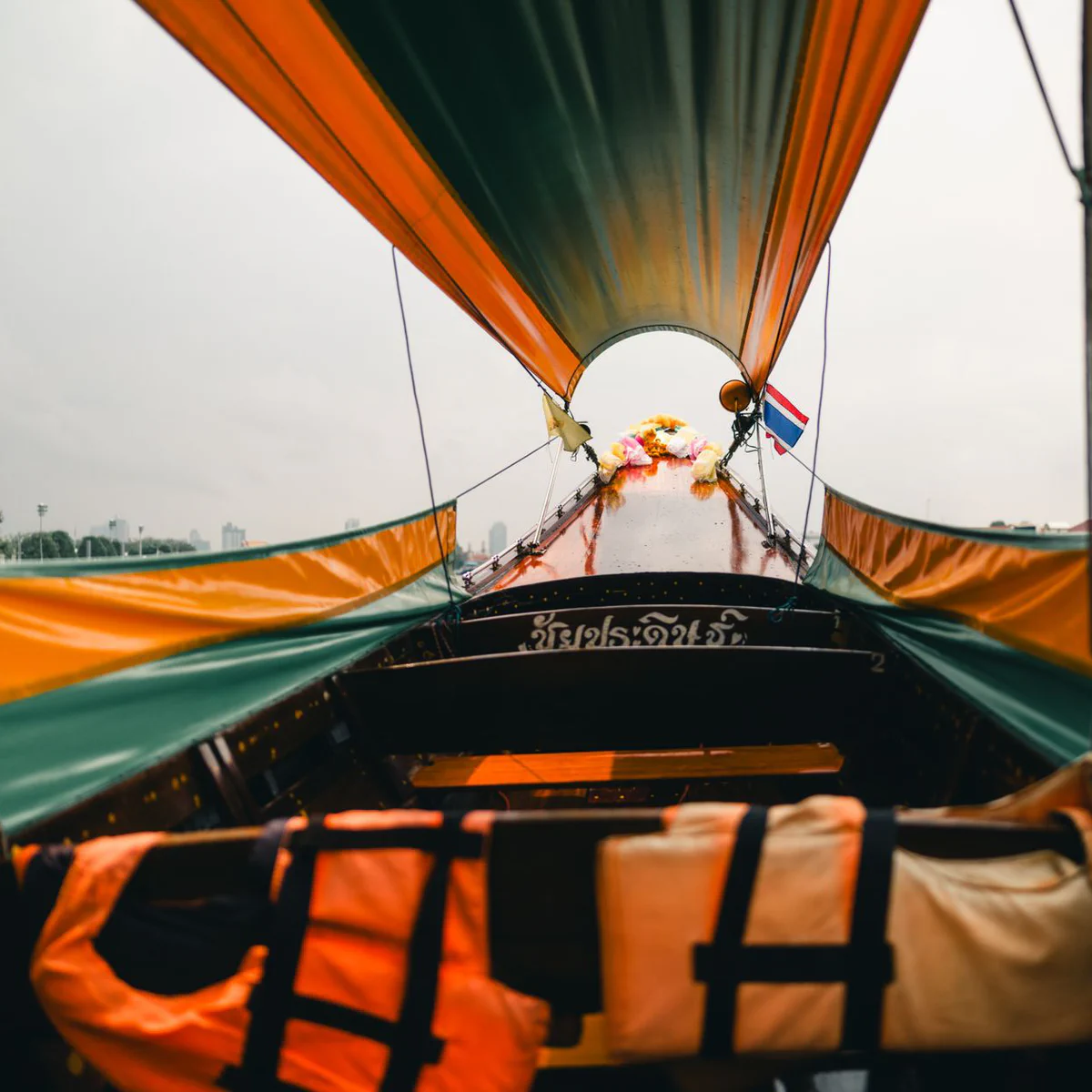
For most travelers, the least stressful route is MRT to Sanam Chai, walk to Tha Tien, then take the tiny cross-river ferry. Pair Wat Arun with Wat Pho rather than treating it as a separate cross-city expedition.
Wat Arun tickets, opening hours and visit time
| Practical detail | Current planning information |
|---|---|
| Opening hours | Daily, 08:00-18:00 |
| Foreign-adult entrance fee | 200 baht |
| Time needed | 60-90 minutes; 90-120 minutes with costume photos |
| Best low-heat window | At opening or after about 16:00 |
| Last comfortable arrival | About 17:00, earlier if you want to climb |
The entrance fee covers the visitor compound. Recent visitors commonly report receiving a small bottle of water with the 200-baht ticket. That is a useful touch in the heat, but it is not listed as a guaranteed inclusion on the temple’s published fee information; bring your own water rather than relying on it.
Carry Thai baht for the temple and ferry. Payment practice can change, and a foreign card is not a dependable fallback at a small pier or rental shop.
How to get to Wat Arun by MRT and ferry
MRT Sanam Chai to Tha Tien ferry
This is the clearest first-time route:
- Take the MRT Blue Line to Sanam Chai.
- Walk about 10-15 minutes toward Wat Pho and Tha Tien Pier. The final streets are exposed and can feel longer with luggage or at midday.
- Buy the inexpensive cross-river ferry ticket at the pier. The crossing itself takes only a few minutes.
- Leave the boat on the Wat Arun side; the visitor entrance is close to the landing.
The ferry fare is only a few baht, but old guides quote different exact amounts. Use the current pier board. Also check the final sailing if visiting near closing—do not assume an old “until 19:00” timetable remains current.

From Wat Pho or the Grand Palace
From Wat Pho, walk directly to Tha Tien Pier and cross. From the Grand Palace, allow roughly 15-25 minutes to reach the pier on foot depending on heat, crowds and the exact exit you use. A tuk-tuk rarely saves enough time to justify negotiating for such a short distance.
From Sukhumvit, Silom or the riverside
- Sukhumvit/Asok: MRT Blue Line from Sukhumvit to Sanam Chai, then walk and ferry.
- Silom: join the Blue Line at Si Lom and continue to Sanam Chai.
- Near Saphan Taksin: use the operator’s current Chao Phraya route toward the Old City, alight at the appropriate east-bank pier, then make the Tha Tien crossing if needed.
- Taxi or ride-hailing: enter “Wat Arun Ratchawararam” and check that the pin is on the west bank. Road access can be slow because the driver must use a bridge; from the east-bank Old City, the ferry is usually simpler.
Do not rely on a blanket claim that every orange- or blue-flag boat stops directly at Wat Arun. River routes, flags and operating days change; consult the live operator map for your date.
How Wat Arun fits into a Bangkok itinerary
The best two-temple half day
Visit Wat Pho first, have an early lunch or cooling drink, then cross to Wat Arun. This keeps the route compact and avoids an unnecessary bridge transfer. If the forecast is very hot, reverse the order: Wat Arun at 08:00, ferry to Wat Pho, then retreat indoors around noon.
A realistic Grand Palace, Wat Pho and Wat Arun day
Start at the Grand Palace near opening, continue to Wat Pho before lunch, then take a proper indoor heat break. Visit Wat Arun around 16:00-17:30 and cross back to the east bank for a sunset view of the temple. Three temples without a break looks efficient on a map but becomes repetitive and exhausting in Bangkok humidity.
Where to see Wat Arun at sunset
The classic sunset photograph is not taken inside Wat Arun. Cross back to the Tha Tien/east-bank riverfront, where bars and restaurants face the temple across the water. Reserve a table if a rooftop view matters, or use the public river edge and pier area for a less expensive angle. Sunset happens after the visitor compound may begin closing, so separate “visit the temple” from “photograph it across the river.”
Can you climb Wat Arun?
Usually, visitors can climb an accessible lower terrace of the central prang. You cannot climb to the top. The open level can change with restoration, rain, crowd control or maintenance, so ask at the ticket desk if the climb is the reason for your visit.
The stairs are unusually steep and the risers are high—closer to a short ladder than an ordinary staircase. Use both hands on the rail, keep your phone in a pocket, allow the person ahead to clear the next step, and descend slowly. Turning slightly sideways can feel more controlled than facing straight down. Skip the climb if the stone is wet, you have vertigo or knee trouble, or a sarong restricts your stride.
Ground level is not a consolation prize. The most intricate porcelain flowers, guardian figures and ceramic fragments are easier to inspect from below, and the full tower photographs better when you step back.
How to rent a Thai costume at Wat Arun
Independent rental shops cluster near the west-bank temple entrance and surrounding lanes. Most accept walk-ins. A straightforward process looks like this:
- Look at the posted rack and prices before choosing a shop.
- Confirm the rental duration, included accessories, dressing help, deposit or ID requirement, late fee and damage policy.
- Choose a temple-compliant outfit that covers shoulders and knees and still lets you use stairs safely.
- Change and let staff pin or adjust the fabric. Check that you can take a full step before leaving.
- Photograph around the grounds without blocking worshippers, doorways or stair traffic.
- Return the clothing by the written time and inspect your belongings before leaving the changing area.
Basic walk-in rentals are commonly advertised around 200-300 baht for two to three hours, often with simple accessories and dressing assistance. Hair styling, makeup and a photographer cost extra. As one current commercial benchmark, an operator near Wat Arun advertises a 300-baht three-hour costume, makeup from 300 baht and professional photography from 2,000 baht. These are market examples, not temple-set prices or a recommendation.
Ask whether the 200-baht temple ticket is separate; it normally is unless a package explicitly says otherwise. Avoid leaving your passport as collateral if a cash deposit or copy is accepted. Photograph the agreed terms and the outfit’s existing marks before you walk away.
Wat Arun dress code, etiquette and safety
Shoulders and knees should be covered for all visitors. Avoid sheer clothing, very tight activewear and torn garments. Wear breathable fabric and shoes that come off easily for the ordination hall. A rented Thai costume is acceptable when worn respectfully; it is not permission to stage loud or obstructive shoots in sacred spaces.
- Remove shoes where instructed and keep your voice low inside the ordination hall.
- Sit with feet pointed away from Buddha images; never climb on statues or decorative walls.
- Give monks and people praying physical space. Women should not touch a monk.
- Do not fly a drone without explicit authorization.
- Keep long scarves and loose costume panels controlled on the prang stairs.
- The ferry gangway and pier can move underfoot. Hold children close and let passengers exit before boarding.
- There is limited shade around the prang. Use sunscreen, a hat and a water break before climbing.
For limited mobility, the riverside and much of the ground-level compound are more realistic than the terrace. The ferry may involve a narrow moving gangway and steps; a road transfer to the west-bank entrance can be easier even if it takes longer.
Best Wat Arun photo spots and timing
Inside the temple grounds
- Base of the central prang: use the porcelain flowers as foreground texture and wait for a gap rather than standing in the main stair flow.
- Outer corner of the courtyard: step back and use a longer focal length to reduce the severe upward distortion of the tower.
- Lower terrace: photograph the smaller prangs, river and rooftops, but keep the narrow passage moving.
- Ornamental doorways and guardians: frame a portrait without touching the decoration or blocking a working entrance.
Early morning offers cleaner ground-level portraits and softer heat. Late afternoon gives warmer porcelain but more portrait sessions and tighter crowding. Midday produces hard shadows and reflected heat; it is the least forgiving time for both faces and stamina.
Across the Chao Phraya
The east bank gives the complete skyline view. Dusk is particularly strong because the prang shifts from warm daylight to illumination while boats cross the foreground. Bring a stable grip or support rather than using flash across the river.

What to see beyond the central prang
The central prang rises about 82 meters and represents Mount Meru in Buddhist-Hindu cosmology. Its floral surfaces are made from porcelain and ceramic fragments associated with Chinese trade. Walk one complete circuit: the details change from guardian figures at the base to tiny flower patterns above.
The ordination hall offers shade and a quieter religious counterpoint to the famous tower. Remove your shoes and look at the Buddha image and murals without using flash. Along the river, the breeze and views toward the Old City make a natural final pause before the ferry.
Wat Arun dates to the Ayutthaya period, but its defining scale comes from 19th-century expansion under Kings Rama II and Rama III. It remains an active royal temple, not a preserved photo set. Temporary scaffolding or a closed terrace is normal maintenance in a humid river environment.
Final planning verdict
Allow 60-90 minutes for a normal visit and up to two hours if renting Thai dress. Go near 08:00 for lower heat, or after 16:00 if you also want the east-bank sunset view. Use MRT Sanam Chai plus the Tha Tien ferry, pair the visit with Wat Pho, and treat the climb as optional rather than the measure of whether the temple was worthwhile.
Compare the site with other choices in the Bangkok temple guide or place it inside a realistic one-day Bangkok itinerary.
Quick answers
Frequently asked questions
How much is the Wat Arun entrance fee?
What are Wat Arun's opening hours?
How do I get to Wat Arun by MRT and ferry?
Can you climb Wat Arun?
Can you rent a Thai costume at Wat Arun?
What should I wear to Wat Arun?
Research notes
Official planning references
We use these primary references for the time-sensitive details relevant to this guide. Rules, prices and operating hours can change, so confirm the live information before you travel.
- Wat Arun visitor information — hours and entrance fee
Details to check: Published daily opening hours, foreign-adult admission, visitor rules and central-prang context; checked 2026-09-04.
- Wat Arun visitor information — getting there
Details to check: Official visitor directions and Tha Tien cross-river approach; checked 2026-09-04.
- Tourism Authority of Thailand — Wat Arun
Details to check: Official attraction identity, history and architectural context; checked 2026-09-04.
- Chao Phraya Express Boat — routes and timetable
Details to check: Current operator route and timetable reference for reaching the Old City river corridor; checked 2026-09-04.
- TripThaiTour — Wat Arun Thai costume service
Details to check: A current commercial example used to benchmark rental duration and optional styling and photography costs; checked 2026-09-04.
Guide reviewed 4 September 2026. Confirm live rules, prices and operating details with the linked authority before travel.